The 'Real Me' Illusion: Why Celebrity Rawness Is the Most Polished Content Online
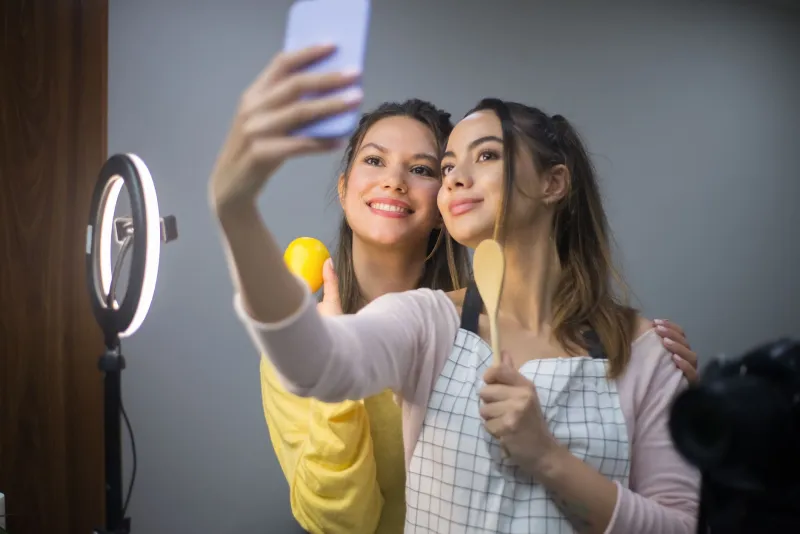
Let me set a scene for you. A celebrity — let's keep it hypothetical — posts a photo to Instagram. No makeup. Hair pulled back. Sitting on what appears to be a kitchen counter, holding a coffee mug, looking vaguely tired in that gorgeous, symmetrical way only certain people can manage. The caption reads something like "just me 🤍" or "no filter needed" or, my personal favorite, "this is the real me."
The comments flood in. She's just like us. So refreshing. I love that she keeps it real.
What those comments don't mention — what nobody mentions, because it would ruin everything — is that this photo was almost certainly taken by a professional photographer, reviewed by a social media manager, approved by a publicist, and posted at a time specifically calculated to maximize engagement. The mug probably doesn't have anything in it.
Welcome to the authenticity industrial complex.
Relatability Is a Product Now
The shift happened gradually, then all at once. As the Instagram aesthetic of the early 2010s — aggressively curated, filter-heavy, aspirationally perfect — started to feel hollow and manufactured, audiences began rewarding a different kind of content. Raw. Real. Relatable. Celebrities noticed. And because celebrities are, above all else, brands with heartbeats, they adapted.
The irony is exquisite: in attempting to escape the artificiality of traditional celebrity image management, the industry created an entirely new and arguably more sophisticated form of image management. The "anti-influencer" aesthetic is still an aesthetic. The "I don't care about my feed" feed is still a feed someone cares deeply about.
The machinery didn't go away. It just got better at hiding itself.
The Calculated Candid Hall of Fame
A few examples worth examining, not to drag anyone specifically, but to illustrate how the genre works.
The "exhausted but thriving" airport photo is a classic. Celebrity is photographed looking disheveled — slightly rumpled clothes, oversized sunglasses, takeout bag in hand — while somehow still looking incredible. The photo will be credited to a paparazzi, but the arrangement between celebrities and certain photographers has been an open secret in entertainment journalism for decades. The "candid" was scheduled. Everyone involved knows this. The audience is the only party not in on it.
The tearful Instagram Story is a more recent evolution. A celebrity films themselves mid-cry, voice cracking, talking about how hard things have been. It feels intensely intimate — the kind of thing you'd share with a close friend, not 40 million followers. But consider: they picked up the phone. They hit record. They chose to post it rather than delete it. Every step in that chain was a decision. That doesn't make the emotion fake — but it absolutely makes the sharing of it a calculated act.
Then there's the "I barely use social media" social media strategy, perfected by a certain tier of A-listers who post infrequently, captionfree or with minimal text, always in slightly grainy or lo-fi formats that suggest they don't really think about this stuff. They think about it constantly. Their teams think about it constantly. The studied nonchalance is the hardest thing to pull off and requires the most effort.
Why We Keep Buying It
Here's where it gets psychologically interesting: even when we know the content is performed, we often still respond to it emotionally as if it isn't. There's research suggesting that perceived authenticity — the feeling of realness — activates the same kind of trust and connection as actual authenticity. Our brains aren't great at making that distinction in real time, especially when the content is designed by people who understand exactly how to trigger that response.
Celebrity social media teams have essentially become experts in applied psychology. They know that imperfection signals honesty. They know that vulnerability builds loyalty. They know that showing "the hard parts" — carefully selected, strategically timed hard parts — makes audiences feel closer to the celebrity, which translates directly into the kind of parasocial attachment that sells concert tickets, streaming subscriptions, and fragrance lines.
We're not being fooled by accident. We're being fooled by professionals.
The Ones Who Actually Break the Formula
To be fair — and fairness matters here — there are celebrities who do use their platforms in genuinely unguarded ways. The tell is usually chaos. Real unfiltered content is inconsistent, sometimes uncomfortable, occasionally embarrassing in ways that no PR team would approve. It goes off-brand. It alienates some people. It doesn't resolve neatly.
The difference between manufactured rawness and actual rawness is usually visible in retrospect. Manufactured rawness always somehow reinforces the brand. Actual rawness sometimes damages it — and the celebrity posts it anyway.
Think about the times a celebrity has said something on a live stream that clearly wasn't planned, or posted something that got quietly deleted an hour later, or gone on a late-night Twitter spiral that their team clearly had no advance notice of. That's the real stuff. It's messier. It's less flattering. And it's genuinely rare.
The Bigger Question
None of this is necessarily malicious. Celebrities are people navigating genuinely unusual circumstances — the demand for constant public visibility, the financial reality that their personal brand is their livelihood, the exhausting pressure to remain relevant in an attention economy that moves at a terrifying speed. Of course they're strategic about it. Anyone would be.
But there's something worth sitting with here. When "authentic" becomes a content category, when "real" becomes an aesthetic, when vulnerability becomes a marketing tactic — what does that do to our collective understanding of what any of those words actually mean?
And maybe more practically: the next time a celebrity posts something that makes you think wow, they're just like me — it might be worth asking who's behind the camera, who approved the caption, and what they're selling.
The mug is probably empty. But the strategy sure isn't.