From Everywhere to Nowhere: The Brutal Economics of a Celebrity Falling Off
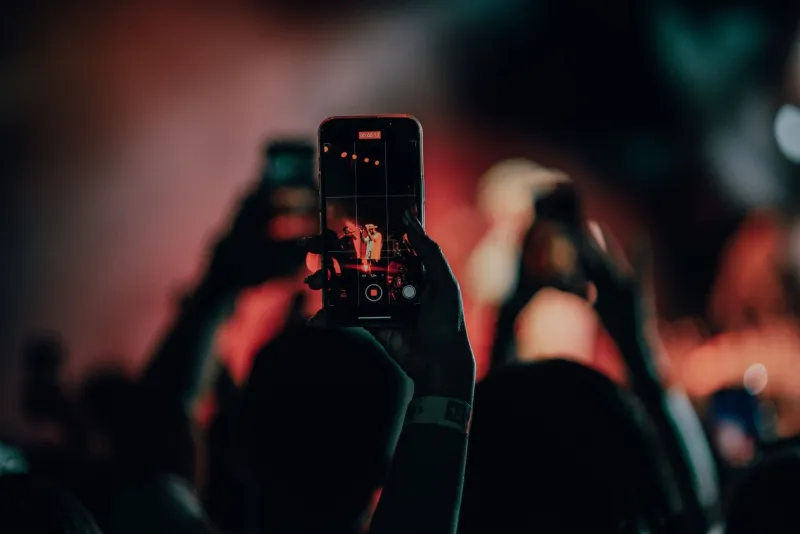
There's a specific kind of silence that follows a celebrity when the world stops caring. It's not the dramatic public meltdown kind — that at least keeps the algorithm fed. It's quieter than that. A sponsored post that gets half the engagement it used to. A movie trailer that drops to collective indifference. A name that used to trend weekly, now only surfacing when someone's asking, "Wait, whatever happened to...?"
That silence? It costs millions.
The Numbers Behind the Noise
Here's the thing most people don't realize about celebrity brand deals: they're priced almost entirely on attention. Not talent. Not even likability, necessarily. Pure, measurable, trackable attention. When a celebrity's engagement rate drops — and brands are watching those numbers obsessively — the contracts either quietly disappear or get renegotiated at a fraction of the original price.
Industry insiders estimate that a major influencer or celebrity losing even 20% of their active engagement can trigger renegotiations that slash deal values by 40 to 60 percent. For someone pulling in $2 million a year in brand partnerships, that's a $1.2 million haircut. And that's before you factor in the deals that just... don't renew.
Brands aren't sentimental. They're running ROI calculations in real time, and the second a celebrity stops converting attention into consumer action, the relationship ends. No dramatic breakup, no press release. Just an email that never comes.
The Overnight Collapse vs. The Slow Burn
Not all relevance deaths look the same. Some are sudden — a controversy that hits at exactly the wrong cultural moment, a viral callout that catches fire, or simply one too many out-of-touch moments that crystallizes a narrative the internet had been quietly building for months. These are the collapses that make headlines because they happen fast enough to feel like a story.
But the more common version is slower and, in some ways, sadder. It's the gradual drift where a celebrity just stops generating the kind of content that people feel compelled to share, argue about, or even mock. They haven't done anything wrong, exactly. They've just become... background noise. And in an attention economy, background noise is the death knell.
The slow burn is actually harder to recover from because there's no specific incident to address, no apology to issue, no narrative to flip. You can't PR your way out of being boring. You can't crisis-manage irrelevance.
What Actually Triggers the Fall
So what flips the switch? A few patterns keep showing up.
Overexposure without evolution. There's a ceiling on how long audiences will engage with the same version of someone. Celebrities who build their brand on a single aesthetic, a single personality mode, or a single type of content often hit a wall where the fanbase has simply consumed everything there is to consume. Without growth or reinvention, the algorithm stops surfacing them because users stop clicking.
Getting on the wrong side of a cultural moment. This one's tricky because it doesn't always require an obvious scandal. Sometimes it's as subtle as seeming out of touch during a period when authenticity is the cultural currency. A tone-deaf post during a national conversation, a luxury flex during an economic anxiety spiral, or simply being associated with a trend that's aged badly — any of these can quietly poison a brand.
The parasocial relationship breaking down. A massive chunk of celebrity value in 2024 is built on fans feeling like they know the person. When something disrupts that illusion — whether it's a revealed PR strategy, a lawsuit with messy details, or just a general sense that the "real" persona was always a performance — the emotional investment evaporates fast. And once fans feel fooled, they don't just unfollow. They actively root against a comeback.
The Box Office Problem
Social media metrics are one thing, but the consequences get really tangible when we're talking about theatrical releases. Studios have started quietly factoring a lead actor's digital footprint into greenlight decisions — not just their name recognition, but the quality of their online presence. Are people excited about this person, or are they exhausted by them?
Several high-profile flops in recent years have been attributed at least partially to audiences simply not wanting to spend two hours with someone they've grown tired of seeing everywhere. There's a fatigue factor that's genuinely new to this era — when a celebrity is omnipresent on social media, audiences have already consumed so much of them that the theater feels redundant rather than special.
For actors specifically, this creates a brutal paradox: stay visible enough to stay relevant, but don't oversaturate to the point where your face triggers a scroll reflex instead of genuine interest.
Can You Come Back?
The comeback narrative is one of Hollywood's oldest and most beloved stories, but the mechanics have changed dramatically. In previous decades, a celebrity could go quiet for a year or two and return with a prestige project or a reinvented image. The gap created mystique.
Now, a year of silence can mean an algorithm has essentially forgotten you exist. Your follower count might hold, but the engagement drops, the reach shrinks, and by the time you're ready to make your return, you're essentially starting over with an audience that's moved on to three new obsessions.
The celebrities who successfully navigate a relevance dip tend to do a few things right: they pivot to a different lane rather than trying to recapture their exact former moment, they find a new audience rather than chasing the old one, and — crucially — they find a way to make the fall itself part of the story. Audiences are surprisingly forgiving of someone who acknowledges the drift and comes back with something genuine to say about it.
The ones who don't make it back? They keep trying to recreate the peak. They post like it's still 2021. They take the same kind of deals, make the same kind of content, and wonder why the numbers keep sliding.
Fame as a Subscription Service
Maybe the most useful way to understand modern celebrity relevance is to think of it like a subscription. Audiences aren't passive fans anymore — they're active subscribers who are constantly, if unconsciously, evaluating whether the content they're getting is worth their continued attention. And unlike Netflix, they don't even have to make a conscious decision to cancel. They just... drift away.
The celebrities who understand this are the ones building careers that actually last. They treat their audience's attention like the finite, valuable resource it is. They innovate, they surprise, they give people a reason to stay subscribed.
Everyone else is one bad quarter away from finding out exactly how much their relevance was worth — and exactly how fast it can disappear.